
Why journal? What are the benefits?
One of the best tools for anyone on a healing or wellness journey is keeping a journal. Keeping a journal is a form of mindfulness that is creative, fun and can provide deep, personal insights that you would have missed about yourself by not journaling.
Benefits include:
- Stress reduction – Research shows that even simply journaling about things you’re grateful for, or personal desires you might have, reduces stress levels in a measurable way.
- Boosts mental health and wellbeing – A 2018 study found that writing about your innermost thoughts and feelings may contribute to lowered blood pressure, improved mood, and a greater sense of wellbeing (as exhibited by fewer stress-related doctor visits). Another study reported similar findings.
- Creates space from negative thoughts – For many overthinkers, it’s easy to find yourself caught up in a negative spiral. Journaling helps create distance in order to create space to view those thoughts from a different perspective.
- Helps process emotions – Not time or money for a therapist? No problem. Journal instead. The process of journaling gives you the opportunity to process your emotions in a safe, contained space. By identifying specific emotions, you can figure out why you feel that way and accept them (and yourself), thus reducing the power those emotions have over you.
- Deepens self-discovery – We are all constantly evolving as we learn various lessons going about our lives. Journaling allows you to reconnect with yourself on a regular basis to rediscover who you are.
When we write, we learn our preferences, pain points, fears, favourites, and dreams.
Anon.
What is ‘bullet journaling’?
Also known as a ‘BuJo’, a bullet journal uses a system of bullet points and symbols to organize tasks, events, goals and inspiration. It’s essentially a method of organizing your thoughts.
Created by Ryder Carroll, the bullet journal system is fairly complex. Each component of the journal is broken down into a series of modules: a future log where you record your plans and aspirations for the future; a monthly calendar that helps you track shorter-term goals, to-dos, and deadlines; a daily log for keeping track of daily tasks, appointments, and immediate deadlines.
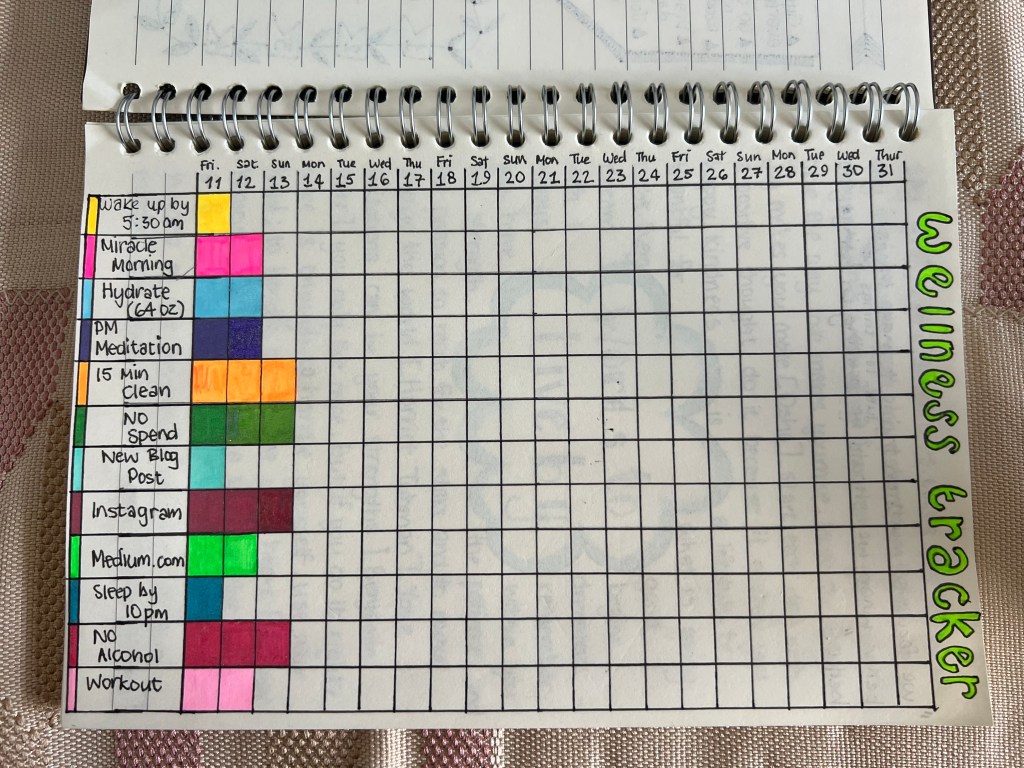

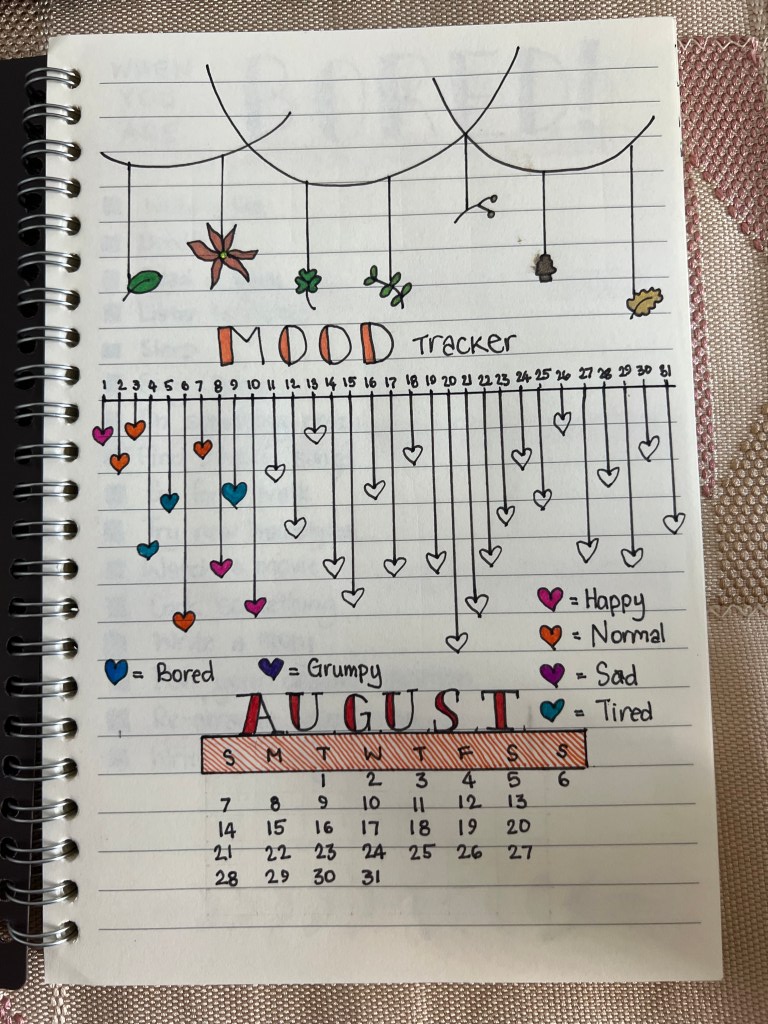

The beginning of the journal contains a detailed index that allows you to quickly keep track of what’s in your journal and where to find it. This index is usually fairly complicated and utilizes symbols and notes to help keep everything organized. The system also relies on different bullet symbols that help you quickly see what you have on your plate each day. A note (any type of fact or observation), would get a dash. A task (i.e. “get milk from the grocery store”) would be noted with a dot. An event (i.e., “Birthday party tonight”) is marked by an open circle.
How do you start?
The wonderful thing about bullet journaling is that you have the ability to customize your bullet journal to your intention. Most BuJo’s contain: an index (i.e. table of contents), a daily log (your daily to-do lists), a monthly calendar, and a ‘future planning’ page (where you keep track of various events, long-term goals and future appointments).
To get started, the first step is to clearly identify what your personal intention is. Will you be filling it out daily, or once a week? What pages will you need the most. This will help you determine what bullet journal layout works best for you.
Once those decisions have been made, purchase the supplies you’ve identified you’ll need. You can incorporate all sorts of designs and doodles in your BuJo using a variety of pens, markers and tape. I would suggest heading to your local arts and crafts store and see what’s available. But remember: all you really need is a blank journal and a pen.
 Orana Eats: Food | Wellbeing | Travel